
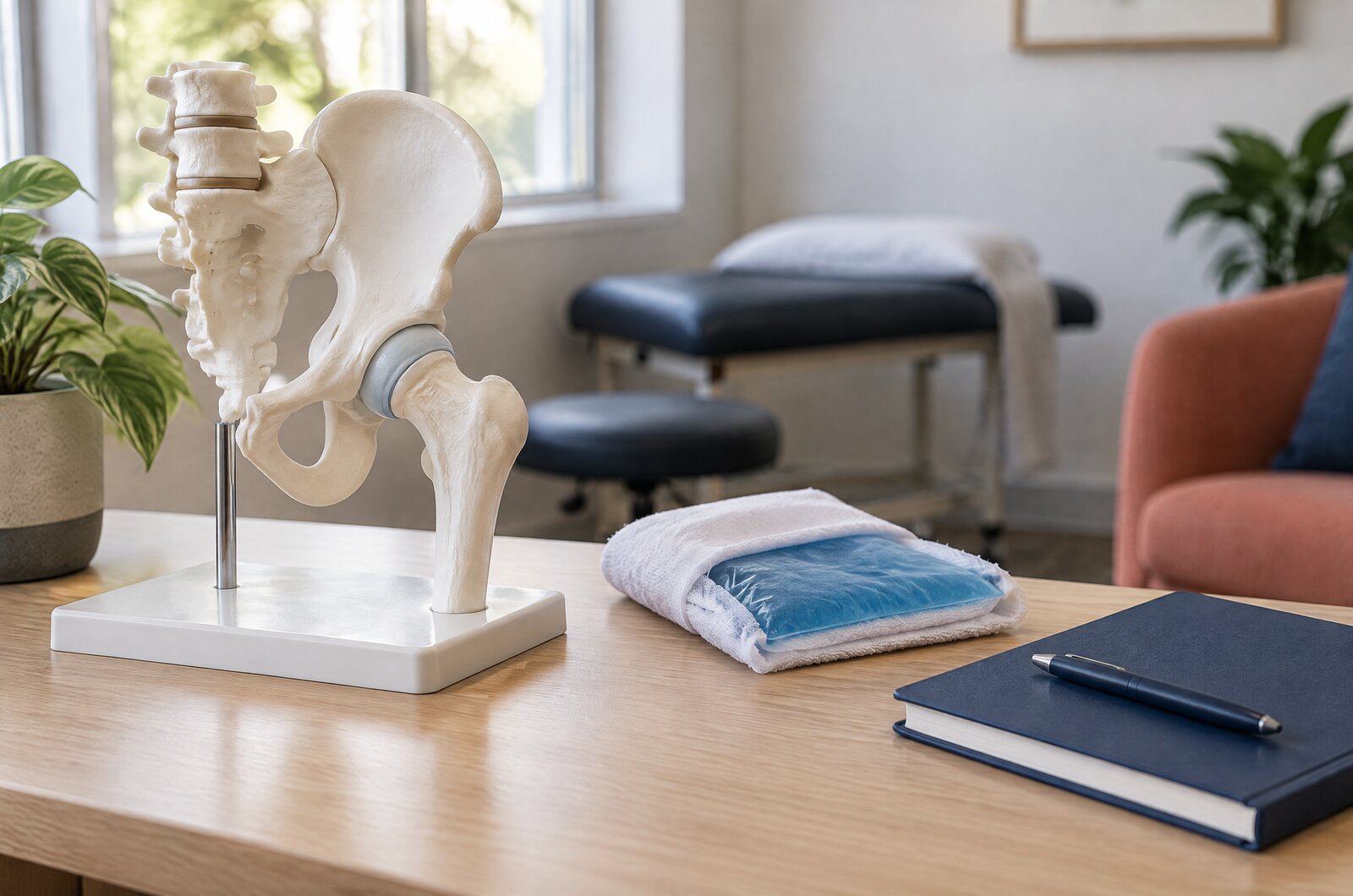
Pain on the outer side of your hip that makes it hard to lie on that side, climb stairs or get comfortable at night can wear you down. If someone has suggested it might be hip bursitis, you may be wondering whether shockwave therapy is worth asking about, and what you should sort out first.
Short answer: Bursitis can often be managed at home first, and healthdirect advises seeing your doctor if painful, stiff or swollen joints are affecting your daily life. A diagnosis matters, because hip pain has other causes. If you are considering shockwave therapy, ask whether it suits your situation and which risks and precautions apply to you.
Summary of the Content:
- Bursitis is when a bursa, a small fluid-filled cushion that protects a tendon where it touches a bone, becomes inflamed.
- Trochanteric bursitis affects the hip and causes pain on the outer side of the hip.
- Self-care often starts with protection, rest, ice, compression and elevation.
- Shockwave therapy has possible side effects and situations where it should be avoided.
- Our initial assessment covers your medical history, symptoms, previous treatments and a physical examination.
What is hip bursitis?
Bursae are small, fluid-filled cushions that reduce friction where tendons slide over bones. When a bursa becomes irritated or inflamed, it swells with fluid, and the swelling can be painful and restrict movement. Healthdirect describes trochanteric bursitis as the type that affects the hip, causing pain on the outer side of the hip.
Symptoms of bursitis can include joint pain and swelling, tenderness around the joint, redness and warmth to touch, and a reduced range of movement. It is commonly caused by overuse of a joint, and it can also follow an injury or be linked with conditions such as gout and rheumatoid arthritis.
What should I try first?
Healthdirect says bursitis can often be treated at home, especially if you can avoid the activity that may have triggered it. Self-care is summed up as PRICE: protection, rest, ice, compression and elevation.
Over-the-counter pain relief can help, and anti-inflammatory medicines can also reduce swelling. Check with your doctor or pharmacist that a pain relief medicine is suitable for you, especially if you have other health conditions. A doctor or physiotherapist may also recommend gentle exercises and stretches.
When should I see a doctor?
See your doctor if you have painful, stiff or swollen joints that affect your daily life. Your doctor will ask about your medical history and examine you, and may suggest tests such as an X-ray, an ultrasound, a sample of fluid from the bursa to check for infection, or a blood test to look for other causes.
Healthdirect notes that a doctor might prescribe antibiotics if the bursa is infected, and that for severe pain a doctor might refer you for a corticosteroid injection into or around the bursa. In some cases surgery to remove or drain the bursa may be recommended.
If your hip is red, hot and swollen, or you feel unwell, see your doctor rather than waiting for a shockwave assessment. Our article on when to see a doctor before shockwave therapy for knee pain covers a similar question for the knee.
Where does shockwave therapy fit?
Our hip bursitis page describes shockwave therapy as one treatment option for hip bursitis and recommends talking with a physiotherapist about whether it is right for you. Shockwave therapy is not listed among healthdirect’s usual treatments for bursitis, so it is reasonable to ask how it would fit with any care you are already having.
Questions you could bring to an assessment:
- Has my hip pain been diagnosed, and could anything else be causing it?
- What would shockwave therapy be aiming to help with in my case?
- How will we check whether it is helping, and when will we review the plan?
- How does it fit with my exercises, medicines or care from my doctor?
- Which risks or precautions apply to me?
What are the risks and precautions?
Our risks and precautions page lists redness, swelling and bruising at the treatment site as possible side effects, and describes nerve injury and damage to blood vessels as potential risks. If you have severe or ongoing pain, numbness, tingling or weakness after a session, see your GP or treating health practitioner.
The same page lists situations where shockwave therapy should be avoided, including blood clotting disorders, a tumour in or near the treatment area, an active infection in the treatment area, and pacemakers or other electronic implants. People with circulation disorders should use caution. Tell the clinician about your health conditions and medicines before treatment.
What happens at a first appointment?
Our treatment process starts with an initial assessment of your medical history, symptoms and previous treatments, along with a physical examination. The clinician explains the procedure and discusses treatment goals with you.
If you have had tests or treatment for your hip already, bring the details. You can also read whether shockwave therapy is suitable for everyone before you book.
Sources
- Healthdirect: Bursitis, last reviewed July 2025.
- Impact Shockwave: Shockwave therapy for hip bursitis.
- Impact Shockwave: Potential risks and treatment process.
Sources checked 16 November 2026. This is general information, not an assessment of your hip.
Final Thoughts
Hip bursitis often settles with self-care, and a doctor’s assessment matters when it does not or when the joint looks infected. If you want to ask about shockwave therapy, go in with your history and your questions, and expect a conversation about suitability and risks first.
Impact Shockwave and Technology Centre is at 44 Barry Marshall Parade, Murdoch WA 6150. Call (08) 6148 8266, contact the clinic or use our online booking page. You can read about Nick Wigger on our team page.
