
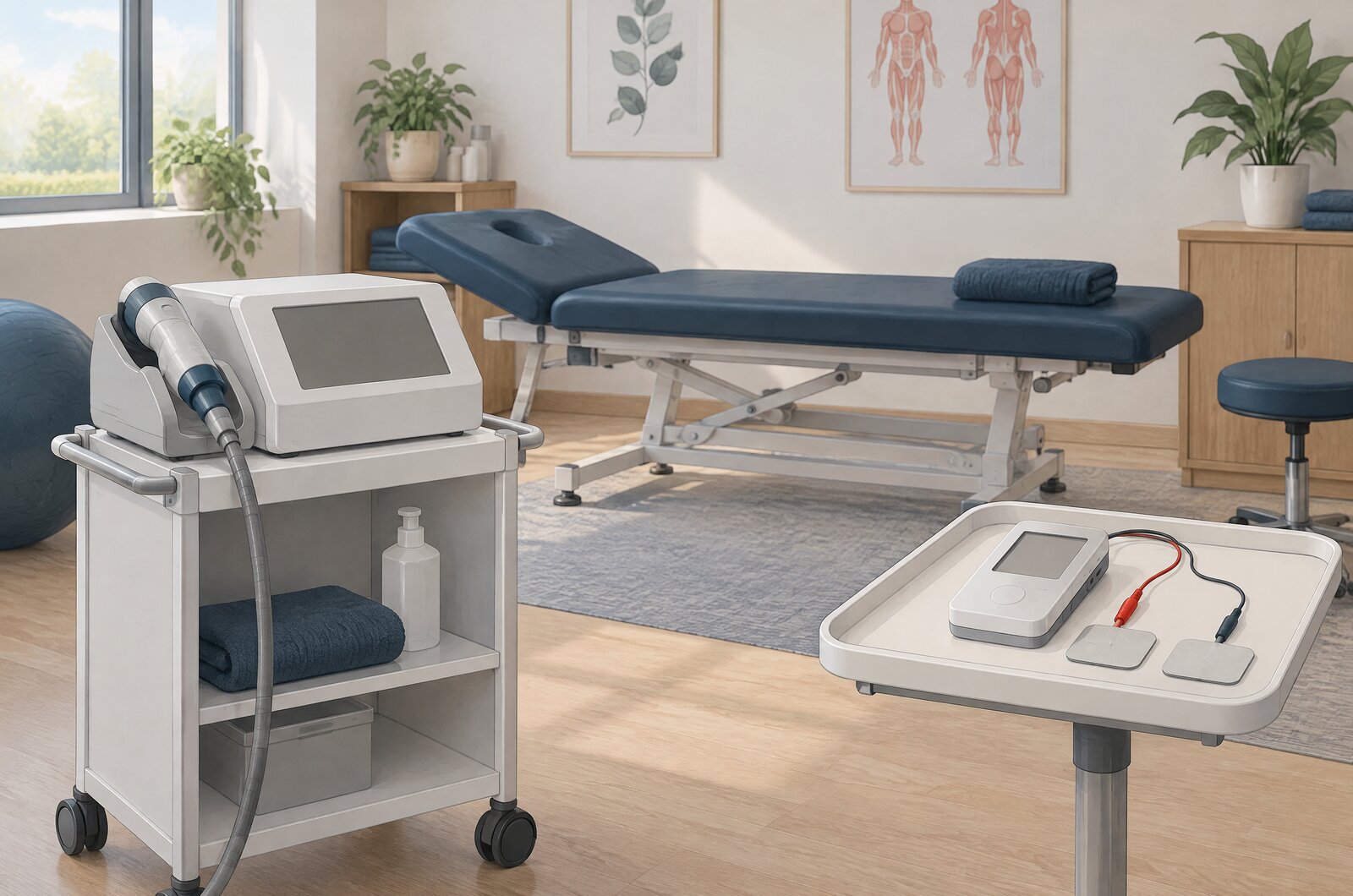
If you’ve used a TENS machine, you might wonder whether a shockwave appointment is more of the same. It isn’t. Shockwave therapy delivers acoustic pressure waves through a handheld device. TENS sends small electrical currents through pads placed on your skin. The names can be confusing, but they describe different treatments.
At Impact Shockwave and Technology Centre, our guide to shockwave therapy explains the acoustic-wave approach. For the electrical-pad treatment, healthdirect’s TENS information is a useful starting point.
Summary of the Content:
- Shockwave uses acoustic waves; TENS uses electrical currents.
- A shockwave session can involve tapping, pressure and discomfort. TENS can feel uncomfortable and may irritate the skin under the pads.
- Before shockwave treatment, the assessment includes your symptoms, medical history and a physical examination.
- Ask a health professional for advice before trying TENS for the first time.
What is the difference between shockwave and TENS?
The difference is the type of energy delivered and how it reaches your body. Shockwave equipment produces acoustic waves, with a handheld applicator directed at the treatment area. A TENS machine delivers small electrical currents through electrodes attached to the skin.
TENS stands for transcutaneous electrical nerve stimulation. The machine is portable and battery-powered. Healthdirect describes it as a way of managing pain without medicines.
During shockwave treatment at our clinic, the therapist applies gel to the treatment area and adjusts the settings in response to your feedback. You can see the two shockwave approaches in our existing article on focused and radial shockwave therapy. That is a separate comparison from shockwave versus TENS.
Will shockwave feel like using a TENS machine?
Don’t assume the sensations will be the same. Our treatment-process page describes rhythmic tapping, warmth or pressure, and possible discomfort during shockwave treatment. Tell the therapist if you feel uncomfortable so they can adjust the settings.
Healthdirect says TENS should not be painful, although some people find it uncomfortable. Skin irritation can occur where the electrodes sit. Its page also explains why you should get advice on the settings and pad positions rather than guessing.
For TENS, ask a health professional where to place the pads, which settings to use, and how long and how often to use the machine. For a clinic appointment, you can simply ask: “What will I feel, and how do I let you know if it’s too much?”
What if I’ve already tried TENS?
Tell us what you used and what happened. Our initial shockwave assessment reviews past treatments as well as your current symptoms and medical history. A note on your phone is fine: include the machine name if you have it, where you put the pads and whether you noticed any change.
The appointment is a chance to ask about your own situation, rather than choose a treatment because both involve a machine. Useful questions include:
- What do you think is causing my pain?
- Why are you suggesting this treatment for that problem?
- What evidence applies to my condition, and what are the limitations?
- What other options should I consider?
- When would we reassess the plan?
If your question is specifically about elbow pain, our article on shockwave therapy and the evidence for tennis elbow looks at that condition. It is not a comparison trial of shockwave and TENS.
What safety checks matter before either treatment?
Shockwave treatment can cause redness, swelling, bruising and pain or discomfort. Our risks page also describes possible nerve, tendon, ligament and blood-vessel injury. Contact your healthcare provider if side effects persist or get worse. Read our shockwave risks and precautions before an appointment.
Our clinic lists pregnancy, blood-clotting disorders, a tumour or infection in the treatment area, certain nerve disorders, severe osteoporosis, and pacemakers or other electronic implants among reasons to avoid shockwave treatment. Circulation disorders also need caution. The pre-treatment health assessment includes a review of current medicines.
TENS has its own precautions. According to healthdirect:
- Do not use TENS if you have a pacemaker or another implanted heart device, epilepsy, or new pain that your doctor has not assessed as safe for TENS.
- Do not put the pads on open wounds or irritated skin, near a tumour, near your eyes, or on your head, chest or the front of your neck.
- Do not use TENS while driving, operating machinery, or in or around water.
- If you are pregnant, ask your physiotherapist, GP or midwife before using TENS.
Speak with a health professional before your first use of TENS. For shockwave, a health assessment helps identify conditions that could make treatment unsuitable.
Frequently Asked Questions
Does the word “shockwave” mean an electrical current through pads?
No. Shockwave treatment uses acoustic waves delivered by a handheld device. Electrical currents through skin electrodes describe TENS.
Should I buy a TENS machine before my appointment?
Healthdirect recommends discussing TENS with your doctor before getting a machine. If you already own one, bring its details and your questions to the conversation.
Sources
- healthdirect: TENS (transcutaneous electrical nerve stimulation), last reviewed October 2024.
- Impact Shockwave: What is shockwave therapy?
- Impact Shockwave: Treatment process
- Impact Shockwave: Potential risks and precautions
- Impact Shockwave: Nick Wigger
- Impact Shockwave: Contact details
Sources checked 8 November 2026. This article explains the difference between the treatments; it does not establish which treatment is appropriate for you. It is general information, not personal medical advice.
Final Thoughts
Shockwave and TENS are different treatments. If you’re unsure which one a referral, website or previous clinician meant, ask for the full name before booking.
To ask about a shockwave assessment with Nick Wigger, contact our Murdoch clinic or call (08) 6148 8266. We’re at Tower C, Level 4, Suite 404, 44 Barry Marshall Parade, Murdoch. You can tell us: “I’ve used a TENS machine and I’d like to understand whether a shockwave assessment is appropriate.”
