
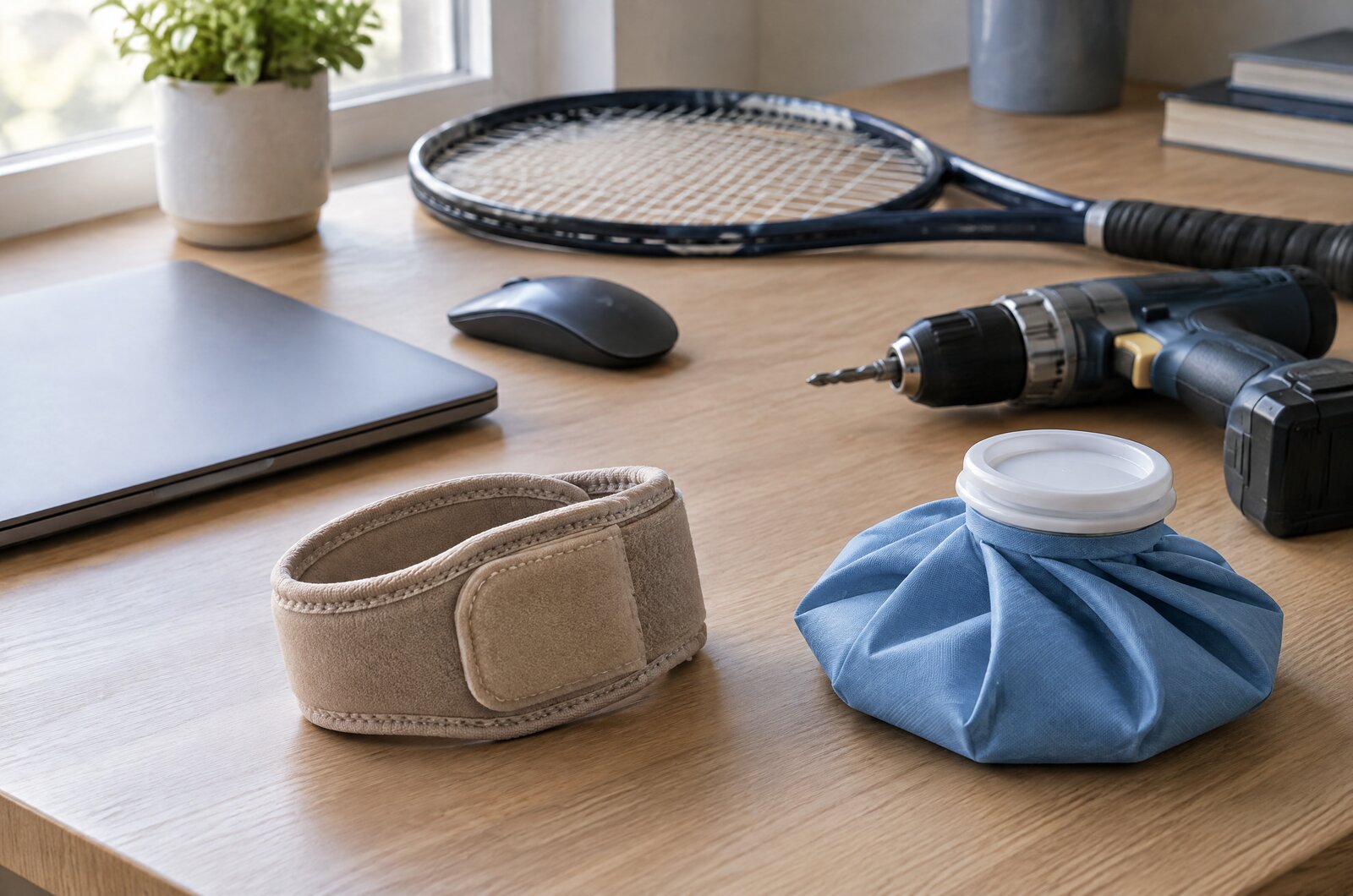
You’ve rested it, iced it, maybe bought a forearm strap, and the outside of your elbow still aches every time you pick up the kettle or shake someone’s hand. Somewhere along the way, someone mentions shockwave therapy. Before you commit to a course, you want to know what it can and can’t do.
This article sets out what Australian health information and the main research reviews say about shockwave for tennis elbow, where the evidence is thin, and how a shockwave course works at Impact Shockwave and Technology Centre in Murdoch. It’s written so you can have a clearer conversation with whoever is treating your elbow.
Summary of the Content:
- Tennis elbow usually gets better on its own, but healthdirect notes recovery can take anywhere from 6 to 12 months.
- The research on shockwave for tennis elbow is mixed. A Cochrane review of nine placebo-controlled trials found little or no benefit, while a 2020 meta-analysis comparing shockwave with other treatments reported better pooled pain and grip scores.
- A second 2020 meta-analysis found that ESWT was effective in patients with a symptom duration of more than 6 months, although the overall differences fell short of a clinically important level and did not last beyond 24 weeks.
- Shockwave isn’t suitable for everyone. Pregnancy, blood clotting disorders and pacemakers are among the reasons it may be avoided.
- Our tennis elbow page describes four to eight treatment sessions for most people, usually spaced a week apart, after an assessment.
Does Shockwave Therapy Help Tennis Elbow?
It may help some people, and the research doesn’t agree on how much. The 2005 Cochrane review pooled nine placebo-controlled trials with 1,006 participants and found little or no benefit for pain and function. Later reviews that include newer trials report small gains in pain and grip, but their authors describe the trials as limited. At our clinic, shockwave is one part of a plan after an assessment, not a stand-alone fix.
What Tennis Elbow Is, and Why It Can Drag On
Tennis elbow, also called lateral epicondylitis or elbow tendinopathy, is pain on the outside of the elbow from repeated use of the wrist or arm. healthdirect describes it as a tear or swelling in the tendons that attach the forearm muscles to the bone in your upper arm.
Despite the name, most people who get it aren’t tennis players. healthdirect lists activities such as rowing, using a screwdriver or hammer, typing, painting, meat cutting and plumbing. Our tennis elbow page adds gardening, housework and playing musical instruments. healthdirect puts it at about 2 in 100 people aged between 30 and 65 years.
The everyday signs are familiar to anyone who has had it:
- soreness on the outside of the elbow that can spread into the forearm
- pain when shaking hands, turning a doorknob or gripping a cup
- weakness in the forearm and a weaker grip
- stiffness in the elbow after waking up
The hard part is the timeline. healthdirect says tennis elbow usually gets better on its own, but recovery can be slow, taking anywhere from 6 to 12 months. That’s a long time to work around a sore arm, and it’s usually when people start asking about other options.
When to See Your GP First
healthdirect recommends seeing your doctor if you’re worried you have tennis elbow, and especially if any of these happen:
- pins and needles or other changes in feeling in your arm or fingers
- your fingers or arm change colour to blue or white
- pain that is getting worse
- abnormal swelling around the elbow
- redness and heat in the area, or fever-like symptoms
What the Research Says About Shockwave for Tennis Elbow
Shockwave therapy (also called extracorporeal shockwave therapy, or ESWT) sends acoustic pressure waves into the sore area through the skin. Three reviews come up again and again when people look into it for tennis elbow, and they don’t reach the same conclusion.
| Review | What it found |
|---|---|
| Cochrane review, Buchbinder and colleagues (2005) | Nine placebo-controlled trials with 1,006 participants. Eleven of the 13 pooled analyses found no significant benefit over placebo. In one trial of 93 people, steroid injection gave greater pain reduction at 3 months. |
| Yoon and colleagues, Clinical Orthopaedics and Related Research (2020) | Twelve randomised trials with 1,104 participants, comparing shockwave with sham treatment or no added treatment. ESWT did not show clinically important improvement in pain reduction and grip strength. Results with radial devices were somewhat stronger than with focused devices, and the effect was seen in people with symptoms for more than 6 months. |
| Yao and colleagues (2020) | Thirteen randomised trials with 1,035 patients, comparing shockwave with other treatments. Pooled pain scores and grip strength were better in the shockwave group, but the authors say more high-quality trials are needed. |
Why the Reviews Disagree
They asked slightly different questions. The Cochrane review and the Yoon review compared shockwave with a placebo or sham treatment, a fake session that feels similar but delivers no real energy. That is a strict test, because people with tennis elbow often improve over time anyway. The Yao review compared shockwave with other treatments, which is a different question.
Timing matters too. The Cochrane review searched for trials in 2005. The Yoon review notes that several trials using different types of shockwave, such as radial devices, were published after it. Yoon’s group also found that the effects did not last beyond 24 weeks.
Put simply, shockwave for tennis elbow is not a sure thing, and the effects reported in trials are modest. Anyone who describes it as a certain fix is going beyond the research. What the research does suggest is where it is more likely to be worth discussing: longer-standing symptoms, and alongside other care rather than instead of it.
Who Might Consider Shockwave, and Who Shouldn’t
Where you are in your recovery changes what the guidance points to. This is general information to take into an appointment, not a substitute for one.
| Where you are | What the guidance points to |
|---|---|
| Sore for a few weeks | healthdirect suggests resting the arm, ice packs, pain relief, staying active while avoiding activities that make it hurt, and a daily wrist stretch. |
| No better after 6 to 12 weeks | healthdirect says it’s a good idea to see a physiotherapist for exercises, a brace or strap, and changes to how you do certain tasks. |
| Still sore after 6 months | The 2020 Yoon review found the effect in people with symptoms for more than 6 months, though it was small. This is a reasonable point to ask about shockwave alongside your exercises. |
| Pins and needles, colour change, worsening pain or heat | See your doctor, as healthdirect advises. |
When Shockwave Isn’t Suitable
Our page on the potential risks of shockwave therapy lists situations where it should be avoided or used with caution:
- pregnancy
- blood clotting disorders
- a tumour in or near the treatment area
- an active infection in the treatment area
- circulation disorders, such as severe varicose veins or peripheral artery disease
- certain nerve disorders
- severe osteoporosis
- pacemakers or other electronic implants
That’s why the first appointment starts with your medical history. Bring a list of your medicines so nothing is missed.
What a Shockwave Session for Tennis Elbow Involves
Our tennis elbow page sets out the steps of a session:
- Consultation. The therapist will review your medical history and discuss your symptoms before any treatment.
- Gel. A gel is applied to the elbow to help the shockwave energy pass into the tissue.
- Treatment. The device is positioned against the sore area. The sensation may be slightly uncomfortable, and you can tell the therapist how it feels.
- Length. Each treatment usually lasts between 5 to 10 minutes, depending on the severity and extent of the condition.
- Afterwards. Mild redness or swelling in the treatment area is normal, and you’ll be given aftercare instructions.
On numbers, our tennis elbow page says most patients with tennis elbow may require four to eight treatment sessions, usually spaced a week apart. For comparison, the trials in the Cochrane review gave three treatments over 3 weeks to 3 months. The right number for you depends on your assessment and how your elbow responds.
The clinic is equipped with radial and focused shockwave systems. Because the Yoon review found somewhat stronger results with radial devices for tennis elbow, it’s worth asking which one is planned for you and why.
Side Effects and Aftercare
The Cochrane review reported minimal side effects, most often brief pain, reddening of the skin and nausea. Our potential risks page gives typical timeframes:
- skin redness usually fades within 24 to 48 hours
- swelling usually subsides within two to three days
- bruising should resolve on its own within five to seven days
- pain or discomfort should decrease within one to two days
If any side effect persists or gets worse, contact the clinic or your doctor.
For the first while after a session, our tennis elbow page suggests avoiding heavy lifting, repetitive arm movements such as tennis or golf, and high-impact activities. These restrictions tend to be brief, and your therapist will tell you when to resume normal activities.
A Note on Anti-Inflammatory Medicines
Here the sources point in different directions, so it’s worth knowing both. healthdirect lists oral ibuprofen among the general self-care options for tennis elbow. Our tennis elbow page says non-steroidal anti-inflammatory drugs should be avoided after shockwave sessions because of possible interference with the healing process. If you take any regular pain relief, ask your physiotherapist and your GP or pharmacist before changing it.
Shockwave Alongside Other Tennis Elbow Treatments
Shockwave sits among several options, and none of them works the same way for everyone:
- Exercise and physiotherapy. healthdirect says a physiotherapist can suggest exercises to stretch and strengthen the muscles in your arm. Our tennis elbow page describes combining shockwave with strengthening work.
- Bracing or taping. A brace or strap on the forearm can reduce stress on the painful area during daily tasks.
- Steroid injection. healthdirect says an injection may ease pain if exercise hasn’t helped, but it doesn’t stop tennis elbow coming back.
- Surgery. healthdirect describes surgery as rarely needed, with a risk of decreased grip strength afterwards.
Questions to Ask Before You Start a Course
Take this checklist to your first appointment:
- How long have I had symptoms, and does that change what you’d suggest?
- Are you planning radial or focused shockwave, and why for my elbow?
- How many sessions are you suggesting, and when will we check whether it’s helping?
- Which exercises should I keep doing between sessions?
- Is there anything in my history, such as medicines, pregnancy or an implant, that rules it out?
- What will each session and the full course cost?
Frequently Asked Questions
How strong is the evidence for shockwave and tennis elbow?
No single answer covers it. The Cochrane review found little or no benefit over placebo, while a 2020 review comparing shockwave with other treatments found better pooled pain and grip scores. The trials vary in quality, so expect a cautious recommendation rather than a promise.
Does a shockwave session hurt?
Our tennis elbow page describes the sensation as possibly slightly uncomfortable. Let the therapist know how it feels during the session.
Can I keep working while I have treatment?
Most people carry on with daily life, but our tennis elbow page suggests avoiding heavy lifting and repetitive arm movements for a short time after each session. Tell the therapist what your work involves so the advice fits your job.
External Resources
- healthdirect: Tennis elbow (last reviewed March 2024)
- Cochrane: Shock wave therapy for elbow pain (Buchbinder and colleagues, 2005)
- Yoon and colleagues, Clinical Orthopaedics and Related Research, 2020
- Yao and colleagues, systematic review and meta-analysis, 2020
- Impact Shockwave: Shockwave therapy for tennis elbow pain
- Impact Shockwave: Potential risks of shockwave therapy
Sources checked 1 November 2026. This article is general published information, not personal medical advice.
Final Thoughts
If your elbow has been sore for months, it’s reasonable to ask about shockwave, as long as you go in knowing the evidence is mixed and the likely gains are modest. A good assessment should weigh how long you’ve had symptoms, what you’ve already tried and whether anything in your history rules it out.
Shockwave treatment at the clinic is led by Nick Wigger. We’re at Tower C Level 4, Suite 404, 44 Barry Marshall Parade, Murdoch, open Tuesday to Friday, 9am to 5pm. Call (08) 6148 8266 and you can simply say: “I’ve had pain on the outside of my elbow for a few months and I’d like an assessment to see whether shockwave is an option for me.” Bring a list of your medicines, any scan reports and a note of what you’ve already tried. You can also contact the clinic online.
