
- 1 Summary of the Content:
- 2 What Is the Full Protocol?
- 3 How Shockwave Therapy Works at the Cellular Level
- 4 The Role of EMTT in Musculoskeletal Care
- 5 How Photobiomodulation Supports Recovery
- 6 What the Research Says About Combination Therapy
- 7 Frequently Asked Questions
- 8 External Resources
- 9 Final Thoughts
What Is the Full Protocol and How Does It Support Musculoskeletal Recovery?
When it comes to musculoskeletal conditions, a single therapy doesn’t always tell the whole story. Tendons, muscles, ligaments, and bones each respond differently to various types of stimulation. This is why some practitioners are now combining multiple technologies to support the body’s natural recovery processes.
The Full Protocol is one such approach, bringing together three non-invasive therapies that each work through distinct cellular mechanisms. This article breaks down the science behind each component and explores what current evidence suggests about their combined application.
You may be dealing with a stubborn tendon issue or recovering from an injury. Understanding these mechanisms can help you have more meaningful conversations with your healthcare provider.
Summary of the Content:
- The Full Protocol shockwave-EMTT-photobiomodulation approach combines three distinct energy types to support musculoskeletal recovery through complementary cellular mechanisms.
- Shockwave therapy uses acoustic pressure waves to trigger mechanotransduction—the process by which mechanical energy is converted into cellular signals for rehabilitation.
- EMTT operates at 100–300 kHz and may penetrate up to 18cm into tissue, potentially supporting cellular energy production and reducing inflammation.
- Photobiomodulation uses red and near-infrared light to stimulate mitochondrial activity and ATP production.
- Research, including randomised controlled trials, has begun examining combination approaches with promising early findings.
What Is the Full Protocol?
The Full Protocol is an integrated treatment approach that combines three non-invasive technologies. This includes shockwave therapy (acoustic energy), EMTT (electromagnetic energy), and photobiomodulation (light energy), to address musculoskeletal conditions through complementary mechanisms. Each works differently at the cellular level, and combining them lies in their potential to support the body’s healing processes from multiple directions.
Why Consider a Multi-Modal Approach
Different tissues may respond to different types of stimulation. Tendons, muscles, ligaments, and bone each have unique cellular compositions and healing requirements. By addressing a condition through acoustic, electromagnetic, and light energy, the Full Protocol aims to provide a more comprehensive approach than any single therapy alone.
Research has begun exploring whether combined approaches may offer advantages for certain conditions. While individual responses vary, the rationale is grounded in the principle that stimulating rehabilitation through multiple pathways may support the body’s natural healing capacity.
Learn more about the Full Protocol and combination therapy at Impact Shockwave and Technology Centre.
How Shockwave Therapy Works at the Cellular Level
Shockwave therapy delivers acoustic pressure waves into tissue, triggering a biological process called mechanotransduction. This is where mechanical energy converts into cellular signals that may support the body’s natural rehabilitation mechanisms. Understanding how this works at the cellular level helps explain why shockwave therapy has become a widely used approach for musculoskeletal conditions.
The Four Phases of Shockwave Action
Research has identified four distinct phases in how shockwave therapy affects tissue:
- Physical phase:
The acoustic pressure wave undergoes absorption, reflection, refraction, and transmission as it travels through tissues of varying density. This creates mechanical stress within the target area. - Physicochemical phase:
The physical stimulus leads to biochemical reactions within cells. This phase triggers the release of ATP (adenosine triphosphate), which serves as an energy source and signalling molecule. - Chemical phase:
Ion channel function in cell membranes becomes altered, and calcium is mobilised within cells. These changes influence how cells communicate and respond to their environment. - Biological phase:
The cumulative effect may modulate blood vessel formation (angiogenesis), exert anti-inflammatory effects, and support tissue regeneration.
Mechanotransduction Explained
Mechanotransduction is the process by which cells convert mechanical stimuli into biochemical signals. Think of it as your cells “sensing” physical forces and responding accordingly. When shockwaves create controlled mechanical stress in tissue, cells interpret this as a signal to initiate healing processes.
This may include the formation of new blood vessels, the release of growth factors, and the activation of cells involved in tissue maintenance.
What Happens at the Tissue Level
At a molecular level, shockwave therapy triggers ATP release that activates ERK1/2 signalling pathways. These pathways are cellular communication routes involved in growth and recovery. A study found that shockwave treatment induced ATP release, increased Erk1/2 and p38 MAPK activation, and enhanced proliferation in mesenchymal progenitor cells.
Shockwave application has also been associated with increased type I collagen production in tendon cells. Additionally, shockwave therapy may influence macrophage behaviour, potentially shifting immune cells from a pro-inflammatory state (M1) towards a recovery-supportive state (M2).
The Role of EMTT in Musculoskeletal Care
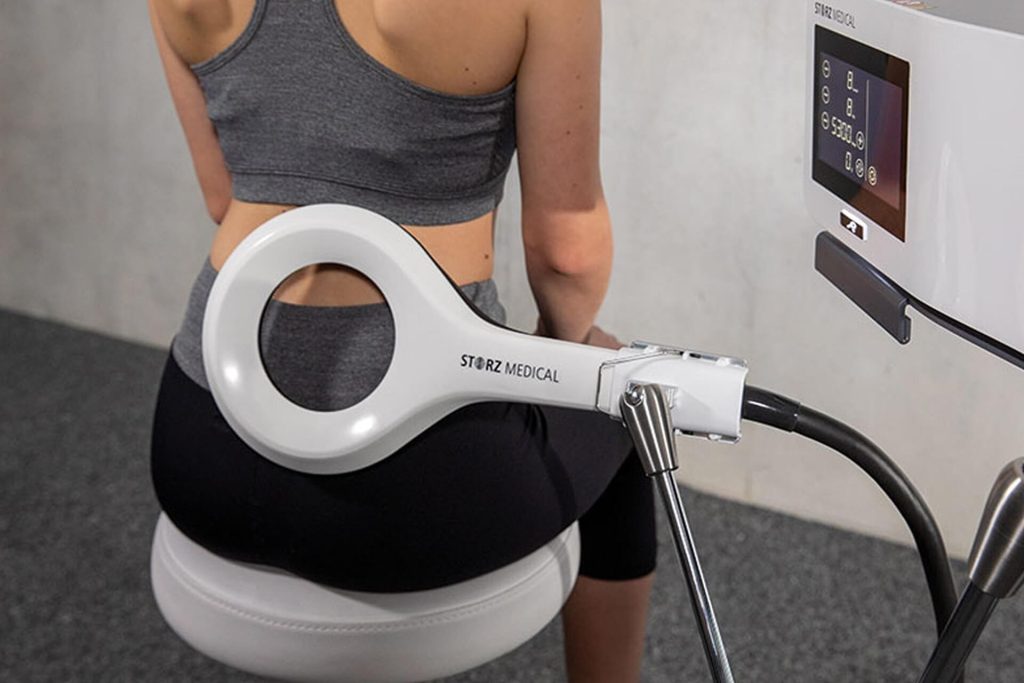
EMTT (Extracorporeal Magnetotransduction Therapy) uses high-energy pulsed electromagnetic fields operating at 100–300 kHz to stimulate cellular activity. Unlike traditional PEMF (Pulsed Electromagnetic Field) therapy, EMTT operates at higher intensity and frequency. This is designed to penetrate deeper into tissues and deliver more substantial electromagnetic stimulation.
How EMTT Differs from Traditional PEMF
While both EMTT and traditional PEMF use electromagnetic fields, several key differences exist, such as the following:
| Feature | EMTT | Traditional PEMF |
|---|---|---|
| Oscillation frequency | 100–300 kHz | 1–100 Hz |
| Intensity | Approximately 40% stronger | Lower intensity |
| Penetration depth | Up to 18cm | More superficial |
| Research base | 5+ randomised controlled trials | Variable study quality |
EMTT was designed specifically for musculoskeletal applications, whereas traditional PEMF devices vary widely in their parameters and intended uses.
The Cellular Mechanism
When tissue is injured, the sodium/potassium pump within cells may become disrupted. This pump is essential for maintaining cellular function and allowing nutrients and healing mediators to move across cell membranes. EMTT is designed to help restore this pump function.
When cellular membrane potential normalises, cells may become more permeable and receptive to the nutrients they need for recovery. Improved cellular function may also support ATP production—the energy currency that fuels regeneration.
Complementing Shockwave Therapy
Shockwave creates mechanical stimulus through mechanotransduction, while EMTT provides electromagnetic stimulus. These represent two distinct pathways for influencing cellular behaviour. According to research, the combination of EMTT and shockwave therapy produced significantly greater pain reduction compared to shockwave with sham-EMTT at 24 weeks. There has also been a significant improvement with the combination approach.
EMTT may also have anti-inflammatory properties, potentially making it suitable for situations where shockwave alone may not be well-tolerated.
Explore more about EMTT Magnetolith Therapy and its applications.
How Photobiomodulation Supports Recovery
Photobiomodulation (also known as laser therapy or light therapy) uses specific wavelengths of red and near-infrared light to stimulate cellular processes. The mitochondria absorb light energy, potentially increasing ATP production and supporting the body’s natural healing responses. This therapy has been studied across various musculoskeletal conditions.
The Science of Light Therapy
Specific wavelengths, typically between 600 and 1100 nanometres, penetrate tissue at different depths. Red light penetrates more superficial layers, while near-infrared light may reach deeper structures such as muscles, tendons, and ligaments. When this light energy reaches cells, it may enhance mitochondria’s ATP production, providing cells with additional energy for healing and maintenance.
Anti-Inflammatory and Regenerative Effects
Photobiomodulation may support recovery through several proposed mechanisms. At the cellular level, it may help modulate inflammatory markers, which in turn could ease the body’s inflammatory response following injury. This process may also promote collagen synthesis, supporting tendon and ligament recovery.
As blood flow to the area increases, more oxygen and nutrients can reach the affected tissues. Some individuals may notice changes in pain perception, which may be linked to how light energy influences nerve conduction.
Different Types of Laser Therapy
Low-Level Laser Therapy (LLLT) uses Class III devices operating at 500mW or less. These primarily work through photobiomodulation effects and are often used for superficial conditions. High-Intensity Laser Therapy (HILT) uses Class IV devices that operate above 500 mW. HILT combines photobiomodulation with thermal effects, potentially allowing deeper tissue penetration.
Not all laser therapy is the same, and the type used will depend on the condition and the depth of the affected tissue beneath the skin. The two main categories differ in their power output and how they interact with tissue. Your practitioner will recommend the appropriate type based on your individual presentation and treatment goals.
What the Research Says About Combination Therapy
Research has begun to examine combination approaches using these technologies. While more studies are needed, early findings suggest potential benefits when therapies are combined. Conditions like rotator cuff tendinopathy, plantar fasciitis, and post-surgical bone healing have shown particular promise. Addressing these conditions through multiple pathways may support the body’s natural recovery processes.
EMTT + Shockwave Research
In a randomised controlled trial involving 86 patients with rotator cuff tendinopathy, the combination of EMTT and shockwave therapy produced significantly greater pain reduction (VAS). This is compared to shockwave with sham-EMTT at 24 weeks. Constant Murley scores, which measure shoulder function, also improved significantly with the combination approach.
A pilot study examined combination therapy following foot and ankle surgeries. Twenty patients who are receiving EMTT and shockwave therapy showed lower post-operative pain scores and a shorter time to return to activity than controls.
Shockwave + Photobiomodulation Research
A combined ESWT and photobiomodulation study for plantar fasciitis showed a 90% reduction in pain scores and a 56% improvement in function. The study reported greater improvements when the therapies were combined compared to either therapy applied individually. Applying photobiomodulation after shockwave may support recovery by modulating inflammation triggered by the acoustic stimulation.
The Rationale for Integration
Each therapy addresses tissue through a different mechanism. Shockwave creates mechanical stimulus, initiating recovery through mechanotransduction. EMTT provides electromagnetic support, potentially enhancing cellular energy production. Photobiomodulation may modulate inflammation and support mitochondrial function.
By combining these approaches, the Full Protocol aims to stimulate recovery through multiple pathways. However, individual responses vary, and ongoing studies continue to explore optimal protocols and applications.
Individual results vary depending on the specific condition, its severity, and other individual factors. Treatment suitability requires individual assessment.
Key Research Summary
| Study | Condition | Key Findings | Year |
|---|---|---|---|
| Klüter et al. | Rotator cuff tendinopathy (86 patients) | EMTT+ESWT showed significantly greater pain reduction and improved Constant Murley scores versus ESWT with sham-EMTT at 24 weeks | 2018 |
| Saxena et al. | Post-operative foot and ankle (20 patients) | Lower pain scores and quicker return to activity in the combination therapy group | 2025 |
| ESWT + PBMT study | Plantar fasciitis | 90% reduction in pain scores and 56% improvement in function versus either therapy alone | — |
Frequently Asked Questions
Understanding how these therapies work at the cellular level can raise plenty of questions. Below, we’ve answered some of the most common queries about the Full Protocol, mechanotransduction, and what to expect from combination therapy. If you have additional questions, our team is happy to chat during a consultation.
What is mechanotransduction, and why does it matter?
Mechanotransduction is the process by which cells convert mechanical stimuli into biochemical signals. When shockwave therapy delivers acoustic pressure waves into tissue, cells sense this mechanical stress and respond by activating healing pathways. This may include releasing growth factors, forming new blood vessels, and increasing collagen production.
Understanding mechanotransduction helps explain why controlled mechanical stimulation can influence how tissues heal and adapt over time.
How does the Full Protocol differ from receiving just one therapy?
The Full Protocol combines three different energy types—acoustic (shockwave), electromagnetic (EMTT), and light (photobiomodulation)—each working through different cellular pathways. The rationale is that different tissues may respond to different stimuli, and addressing a condition through multiple mechanisms may provide a more comprehensive approach.
A practitioner can assess what combination may be appropriate for your individual situation, as responses vary between people.
Is the Full Protocol suitable for acute injuries or chronic conditions?
Each component may be presented in different ways. EMTT is often well-tolerated in acute presentations due to its anti-inflammatory properties. Shockwave is commonly used for chronic tendinopathies where tissue remodelling is a goal. Photobiomodulation may be applied in various stages of healing.
A qualified practitioner will assess which combination and timing may be suitable based on your specific condition, its stage, and your individual circumstances.
How many sessions are typically involved?
Treatment courses typically range from five to eight sessions, though this varies based on the condition, individual response, and clinical assessment. Sessions are usually spaced to allow for tissue response between treatments—often 5 to 10 days apart. Your practitioner will recommend a schedule based on your assessment and will monitor progress throughout, adjusting the approach as needed.
What does ATP production have to do with tissue healing?
ATP (adenosine triphosphate) is the primary energy currency of cells. Every cellular process, including tissue recovery, requires energy. Both EMTT and photobiomodulation are designed to support mitochondrial function and ATP production. Shockwave therapy triggers ATP release that activates signalling pathways involved in recovery.
When cells have adequate energy available, they may be better equipped to perform the functions necessary for healing and tissue maintenance.
Is there research supporting combination therapy for musculoskeletal conditions?
Yes, several studies have examined combination approaches. The Klüter et al. randomised controlled trial found that EMTT combined with shockwave produced significantly greater improvements in rotator cuff tendinopathy compared to shockwave alone. Studies on combined shockwave and laser therapy for plantar fasciitis have shown promising results.
While findings are encouraging, research continues, and individual assessment remains important for determining appropriate treatment approaches.
External Resources
For those interested in exploring how combination therapies have been applied in injury recovery, this video discusses the use of shockwave therapy, EMTT, and laser therapy in a musculoskeletal recovery context.
Final Thoughts
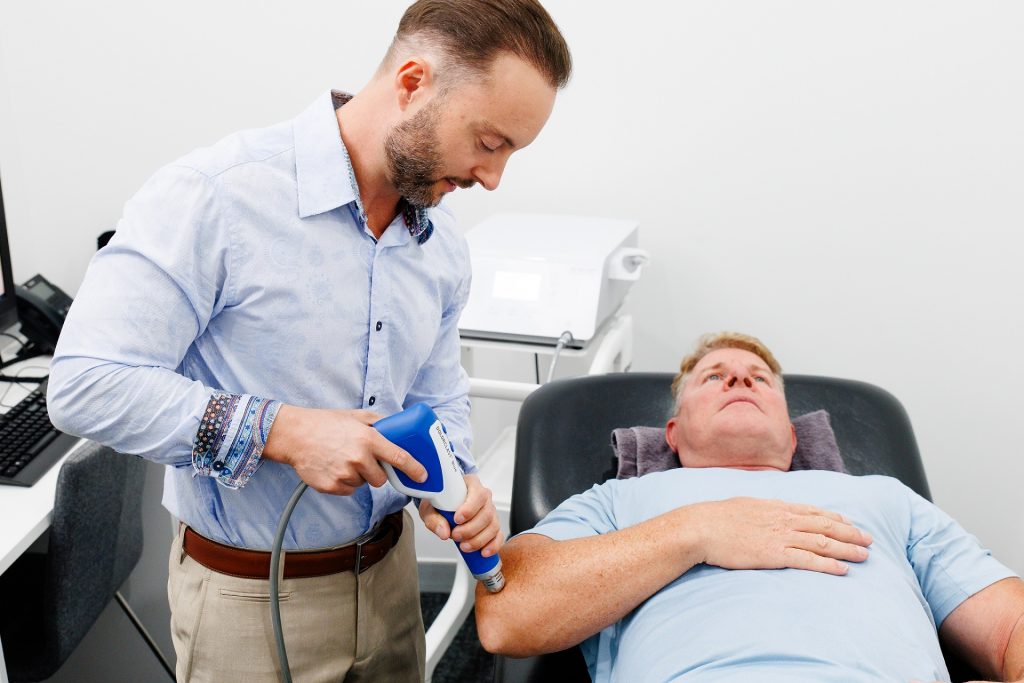
The Full Protocol represents an integrated approach to musculoskeletal care, combining shockwave therapy, EMTT, and photobiomodulation—three technologies that work through distinct cellular mechanisms. Shockwave delivers acoustic energy that triggers mechanotransduction. EMTT uses electromagnetic fields to support cellular function. Photobiomodulation applies light energy to stimulate mitochondrial activity.
Research continues to explore how these therapies may work together, with studies showing promising findings for conditions ranging from tendinopathies to post-surgical recovery. While individual responses vary, the scientific rationale for combining different energy types to support tissue recovery continues to develop.
At Impact Shockwave and Technology Centre, all three technologies are available as part of a comprehensive approach to musculoskeletal care. If you’d like to learn more about whether the Full Protocol may be appropriate for your situation, we welcome you to book a consultation and discuss your individual needs.
Written by: Nick Wigger, Physiotherapist, AHPRA Registration No. PHY0000981564
Nick Wigger is a physiotherapist in Perth with nearly two decades of clinical experience. He uses non-invasive modalities including shockwave, magnetotransduction, and photobiomodulation to support recovery and long-term comfort.
